

 Facebook
 X
X
 Pinterest
 Copy Link
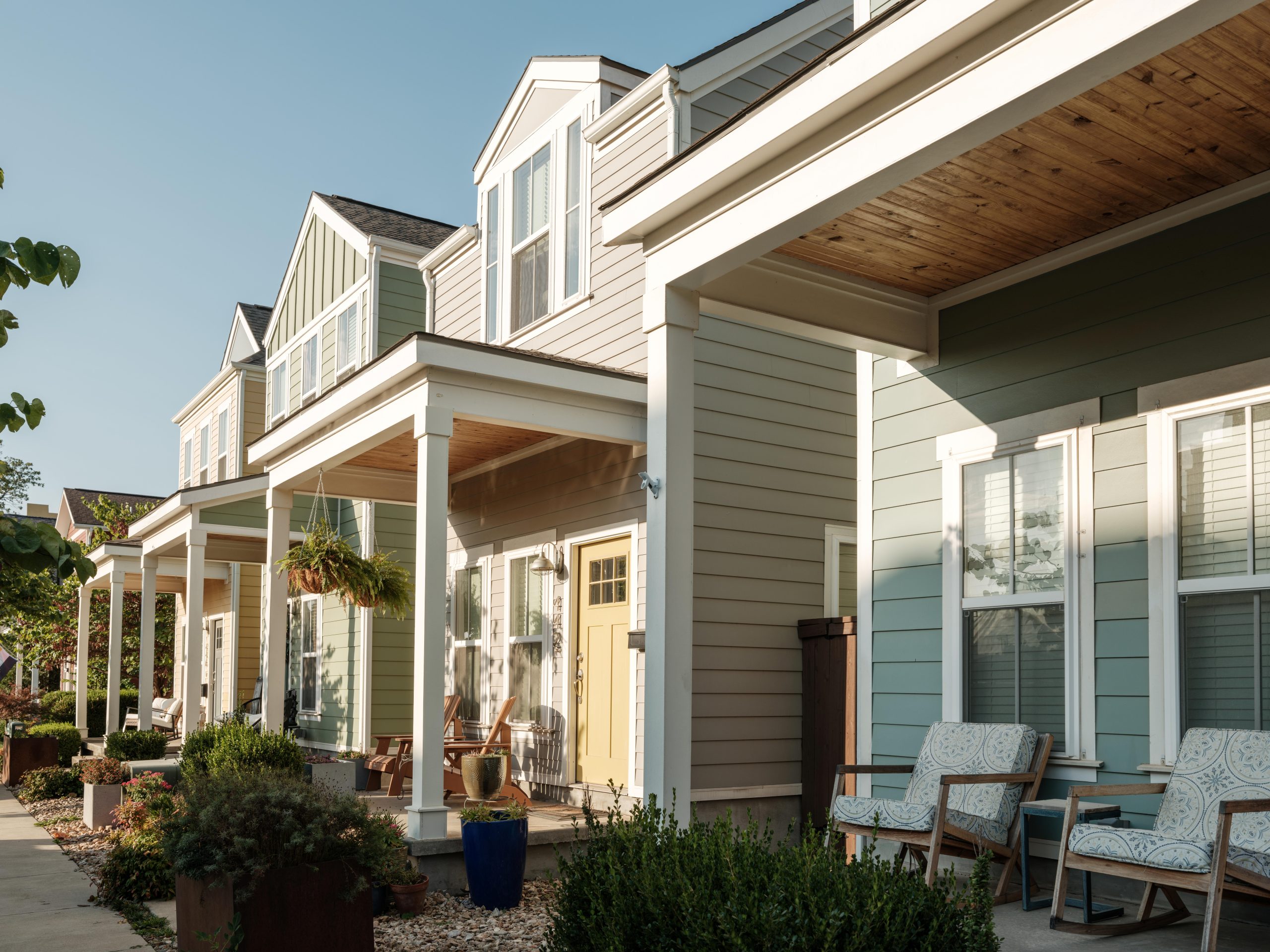
Imagine starting your day like this.
You step outside your front door and walk along a quiet path lined with trees. Instead of traffic and driveways, you see a shared green space where neighbors are walking their dogs or enjoying their morning coffee.
You hop on your bike and connect to a nearby trail. Five minutes later, you’re arriving at your office.
Later that evening, you meet friends downtown for dinner without ever needing to get in your car.
It may sound like a lifestyle from a much larger city, but this kind of living could become more common right here in Northwest Arkansas. It is based on a housing concept known as a pocket neighborhood, and it could play a role in how the region grows over the next decade.
What Is a Pocket Neighborhood?
The idea of pocket neighborhoods was popularized by architect Ross Chapin.
Instead of large subdivisions filled with wide streets and long driveways, pocket neighborhoods are small groups of homes built around shared outdoor space.
These communities are usually made up of:
- about 10–20 homes
- front porches that face a shared lawn or courtyard
- walking paths connecting the homes
- parking placed behind the homes or at the edge of the neighborhood
The design encourages neighbors to interact while still giving homeowners their own private space. In many ways, it brings back the feel of older neighborhoods where people spent more time outside and knew the people living next door.
Why This Idea Fits Northwest Arkansas
Northwest Arkansas is growing quickly.
Cities like Bentonville, Rogers, Springdale, and Fayetteville continue to attract new residents every year.
At the same time, the region has something that makes it unique: an incredible trail system that connects communities together.
For many residents, biking or walking the trails is already part of daily life. As the region grows, neighborhoods that connect easily to those trails may become even more appealing. Pocket neighborhoods are designed exactly for that kind of lifestyle.
Rising Home Prices Are Changing the Conversation
Another reason this housing style is getting attention is the cost of housing.
According to Arkansas One MLS data, the average home price in Northwest Arkansas increased from $267,685 in 2019 to $474,872 in 2025.
That’s about a 77 percent increase in just six years.
While that growth has been great for many homeowners, it also means builders and city planners are starting to think differently about how neighborhoods are designed. Smaller homes arranged around shared green spaces can make better use of land while still creating attractive places to live.
Trails Could Make This Lifestyle Possible
One of the biggest reasons this type of housing could work in Northwest Arkansas is the region’s expanding trail network.
The Razorback Regional Greenway already connects multiple cities across the region and gives residents miles of biking and walking access.
But the long-term plan goes even further.
Through the Forward 2050 Regional Transportation Plan, the Northwest Arkansas Regional Planning Commission plans to expand trail connections deeper into neighborhoods throughout the region.
The goal is to make it easier for residents to travel between neighborhoods, parks, schools, and job centers without always needing a car. As these connections grow, the idea of walking or biking to work, or to dinner downtown, becomes far more realistic.
Real Examples of Pocket Neighborhood Living in NWA
While this concept may sound new, Northwest Arkansas is already starting to see it take shape.
In Bentonville, the Black Apple Pocket Community is one of the most well-known examples. This small neighborhood was designed around a shared green space and sits close to downtown, making it easy for residents to walk or bike to nearby trails, parks, and local destinations.
Communities like Harmony have followed a similar approach, offering smaller clusters of homes with intentional layouts that encourage connection while still maintaining privacy. These neighborhoods focus on simple living, shared space, and easy access to the surrounding area.
Another example is 11th Street Cottages in Fayetteville, which features a collection of smaller homes designed with walkability and community in mind. Its location and layout make it a great example of how this concept can fit naturally into the fabric of Northwest Arkansas.
These developments show that pocket neighborhoods are not just an idea for the future. They are already beginning to take root right here in our region.
A Growing Region Means New Housing Ideas
Northwest Arkansas has always been a region that adapts as it grows.
As more people move to the area, new housing ideas will likely continue to emerge. Pocket neighborhoods may not replace traditional subdivisions, but they could become another option for people looking for walkable communities and strong neighborhood connections.
With the region’s expanding trail system, growing job market, and continued investment in infrastructure, the idea of living in a small, connected neighborhood may become more common in the years ahead.
Learn More About These Developments
If you’re curious about pocket neighborhoods or any other real estate opportunities in Northwest Arkansas, a Coldwell Banker Harris McHaney & Faucette REALTOR® can help you explore current developments and find a home that fits your lifestyle. Reach out to one of our local agents to learn more about what’s available in your area.


